Do You Really Need a Panel Upgrade?
Electrical panel upgrade information and requirements
What affects the installation price?
The condition and capacity of the existing service, the reason for the upgrade, and any other work needed affect the scope. Tell us what you’re adding or what problems you’re having. Ask what the estimate includes and whether utility coordination or additional work is needed.
Ask about your installation →Why do panels need to be replaced?
Adding an EV charger or dealing with breakers that keep tripping? We'll check your panel, explain what we find, and recommend an upgrade only if you need one.
1. The breakers aren't doing their job
A breaker should cut the power when a circuit carries more current than its wiring can handle. If it doesn't, the wiring can overheat and start a fire.
Federal Pacific Stab-Lok and Zinsco breakers have failed to trip in overload tests. Some Zinsco panels have red or blue breaker handles, but we identify the equipment by its label, not color alone.
Older fuse boxes need a different check. Oversized or bypassed fuses can leave the wiring unprotected. We'll check for those problems, damage, and whether the box can handle your needs.
Does your panel look like one of these?
These photos can help you identify your panel. Leave the cover in place; we can check the equipment when we visit.
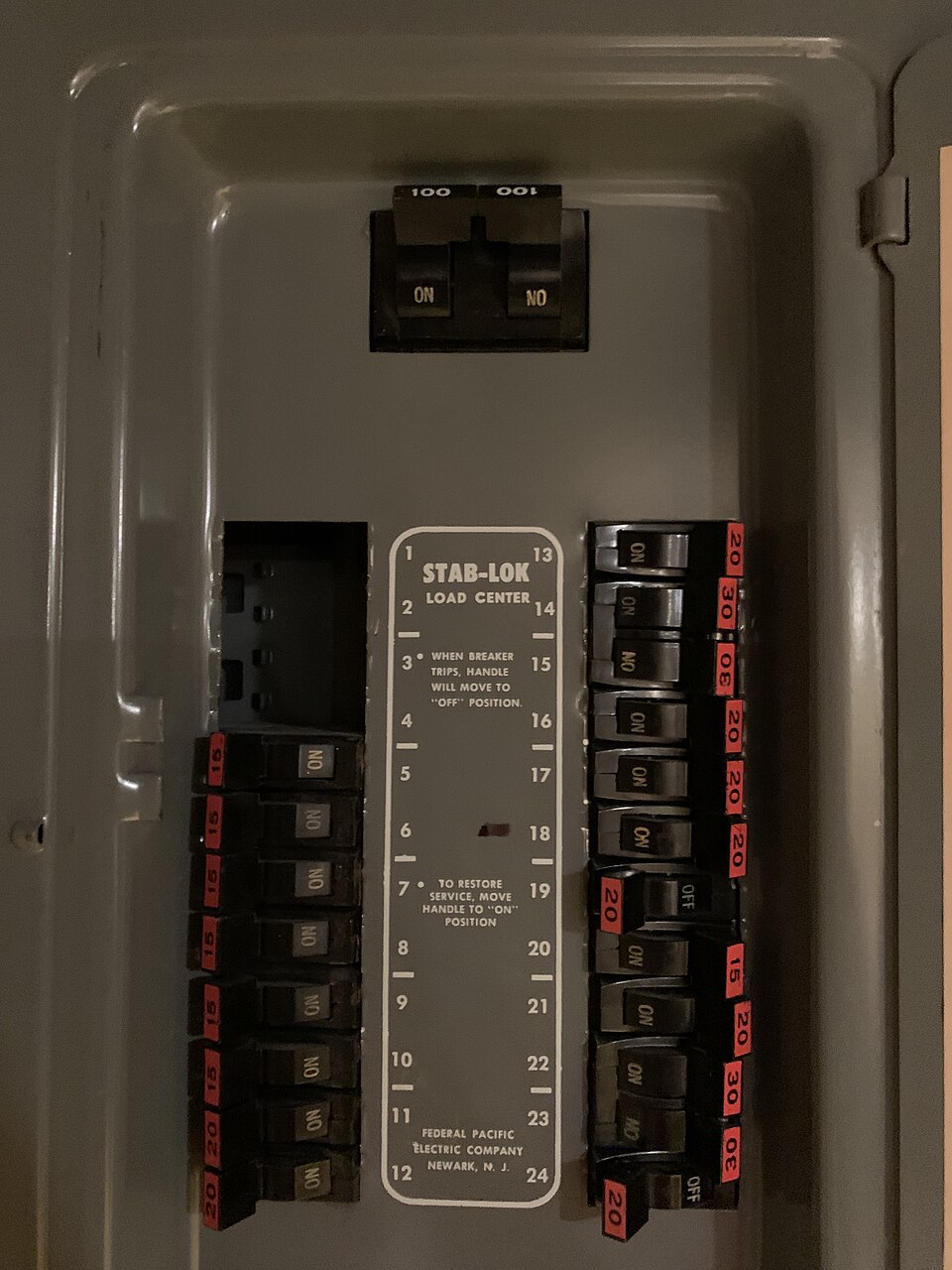
Federal Pacific Stab-Lok
Look for the Federal Pacific or Stab-Lok name on the label. If yours matches, talk to us about replacement.
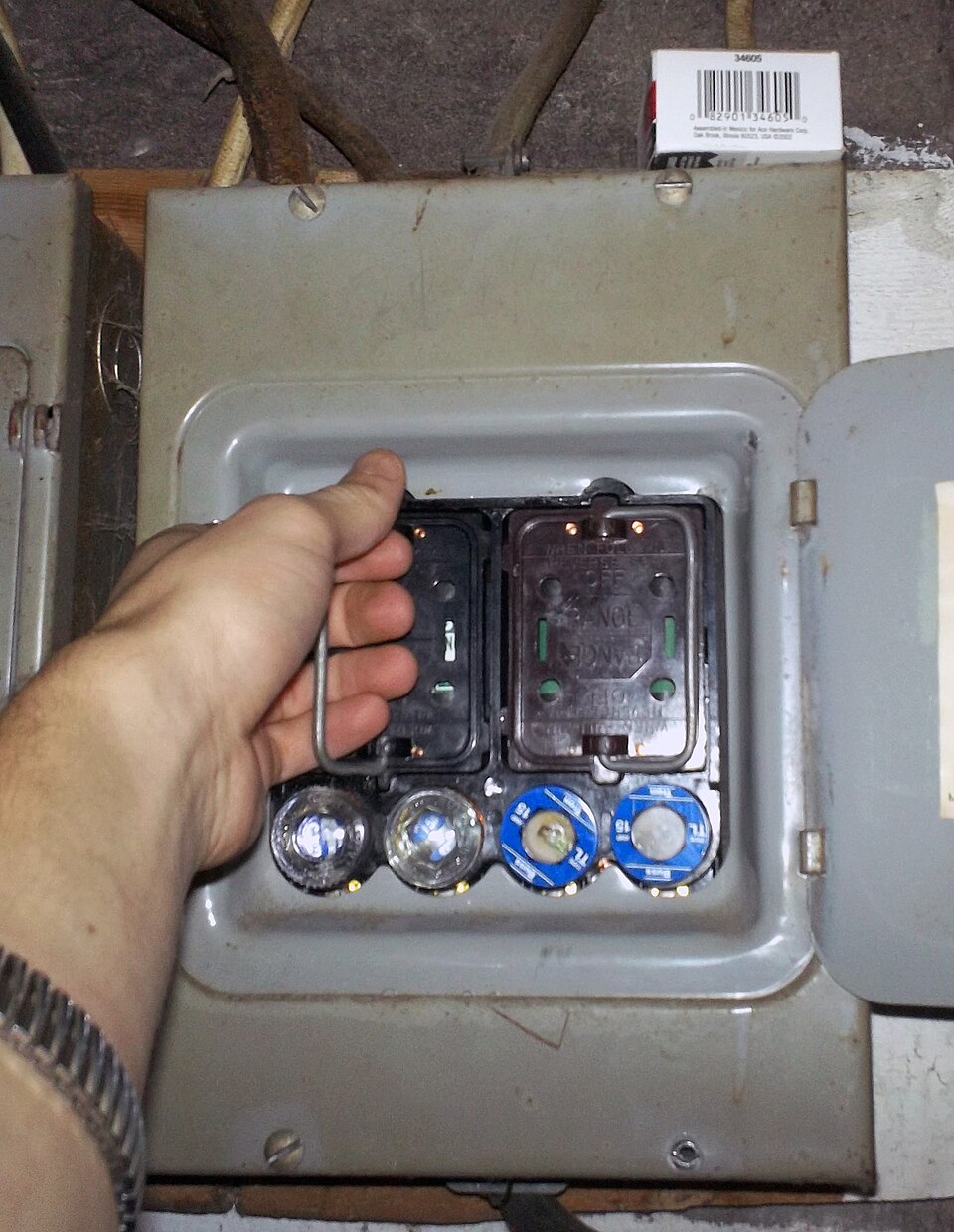
Older fuse box
This Murray box uses screw-in fuses. Having fuses alone doesn't mean you need a new panel. We'll check its condition and whether it can handle the power you need.
2. You're asking more of your electrical system
An EV charger, heat pump, or other new equipment can add more demand than your existing service can handle. A breaker that keeps tripping may also point to a problem on one circuit. We'll find out what's causing the problem and calculate how much power your home needs.
3. Is a larger service necessary?
Replacing a panel doesn't always mean increasing the amount of power coming into your home.
Intelligent load management can control how much power certain equipment uses at one time. For example, a compatible EV charger can slow down while other appliances are running, then charge faster when more power is available.
That can sometimes avoid a service upgrade. We'll compare the options for your home before recommending a larger service. Load management won't fix a damaged panel or unreliable breakers.
Indicators Your Panel May Need Attention
- Frequent breaker trips when using multiple appliances
- Lights dimming when HVAC or large appliances start
- Burning odor from the panel area - requires immediate attention
- Panel warm to touch - indicates overloading or loose connections
- Fuse-based system - have its condition and capacity checked before adding more electrical equipment
- Home additions planned - increased square footage requires capacity review
Panel Upgrade Scope of Work
Modern code requirements have expanded what's involved in a panel upgrade. It's not just swapping boxes anymore:
- A panel sized for your needs, with current code-compliant breakers
- Updated grounding and bonding to 2023 NEC standards
- Grouped service disconnects (new requirement)
- Surge protection (now required in many jurisdictions)
- Arc-fault breakers for required circuits
- Proper torquing of all connections to spec
- Complete load calculation documentation
What Affects Your Service
Service requirements depend on panel size, service entrance condition, grounding and bonding updates, and permitting/inspection requirements. We'll perform a load calculation and provide a consultation.
New Code Requirements (2023 NEC)
The latest electrical code brought significant changes:
- Service disconnects: Must be grouped in one location
- Surge protection: Required for all dwelling units
- Grounding and bonding: Expanded requirements for safety
- GFCI protection: Required for 250V receptacles (like dryer outlets)
- Emergency disconnects: New labeling requirements
Why Proper Installation Matters
We see shortcuts that save installers time but compromise safety:
- Improper grounding: Relying on a water pipe alone. A qualifying metal water pipe can be part of the grounding system, but needs a supplemental electrode.
- Skipping bonding: Not bonding gas lines, water pipes, and other systems
- Wrong torque specs: Over-tightening damages equipment, under-tightening causes fires
- Missing surge protection: Required by code but often "forgotten"
- Reusing old breakers: Breakers wear out and may not trip properly
Shortcuts can appear to save money upfront but create serious safety hazards. Proper bonding provides a low-resistance path back to the electrical source so a breaker or fuse can disconnect a fault. Ground rods alone cannot do that. Learn more about proper grounding and bonding →
⚠️ Important Safety Warning
Never pull your panel cover off. Even with the main breaker off, those fat wires at the top are still hot. 240 volts. It'll kill you before you hit the ground.
Professional Assessment Questions
When consulting with any electrician about panel upgrades, consider asking:
- Can you perform a load calculation to verify upgrade necessity?
- Are there alternatives to a complete panel replacement?
- Will you coordinate with DTE Energy and handle permits?
- What specific work is included in your service?
Not Sure About Your Panel?
Tell us what you're adding or what problems you're having.
We'll follow up to discuss what you need.